
Women represent a significant opportunity for growth within Nigeria’s financial services sector. Yet, differences in their financial needs, circumstances, behaviours and experiences are not always adequately reflected in how financial products and services are designed and delivered. Addressing these gaps requires financial service providers (FSPs) to move beyond a one-size-fits-all approach and integrate gender considerations into their institutional strategies, products and customer engagement processes.
The findings from the A2F 2026 Survey reinforce the importance of this approach. While formal financial inclusion improved between 2023 and 2026, rising by 8 percentage points for both women (59% to 67%) and men (70% to 78%), the gender gap remained unchanged at 11 percentage points. The disparities are also evident in overall financial exclusion. In 2026, 26% of women remained financially excluded, compared with 17% of men. Women account for 59% of all financially excluded adults despite representing 49% of Nigeria’s adult population. This disproportionate representation highlights the need for financial institutions to look beyond aggregate inclusion figures and better understand the barriers women face in accessing and using financial services.
For FSPs, these findings point to an important opportunity: translating gender insights into more responsive products, appropriate credit assessment processes and customer engagement strategies that reflect women’s diverse circumstances. Doing so can support improved financial inclusion outcomes while enabling institutions to build stronger customer relationships and more sustainable portfolios.
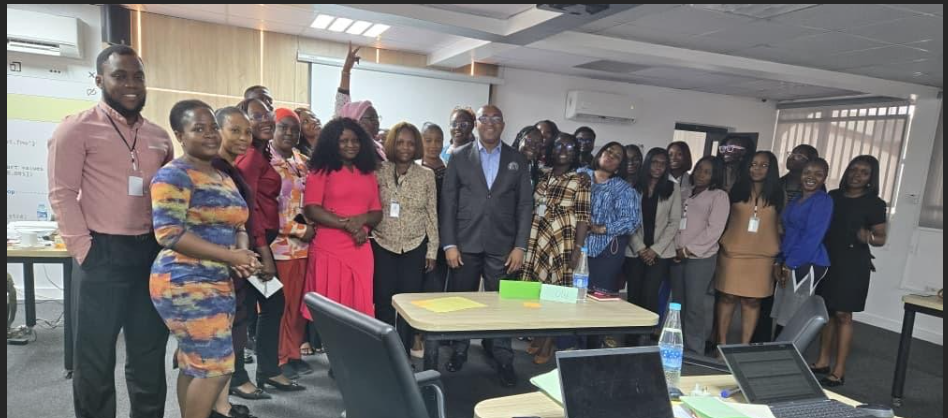
Recognising both the inclusion imperative and the business opportunity, EFInA’s Gender Centre of Excellence (GCE) delivered a two-day capacity-building workshop for WEMA Bank on 28 and 29 September 2026. Themed “Gender Mainstreaming to Advance Sustainable Portfolio Growth,” the workshop explored how applying a gender lens to financial service delivery can support more inclusive customer experiences while unlocking opportunities for sustainable portfolio growth.
Moving Beyond a One-Size-Fits-All Approach
A central focus of the workshop was the need to recognise women as a diverse customer segment, rather than a homogeneous market. Women’s financial needs and behaviours are shaped by different economic circumstances, life stages and social realities. Understanding these differences is essential to developing financial solutions that are relevant, accessible and responsive. Through interactive discussions and practical exercises, participants examined the business case for gender-responsive financial services, exploring opportunities within the women’s market and how financial institutions can better serve and retain women customers. The sessions also examined women-centred product design, with particular attention to credit. Discussions covered unconscious bias, power dynamics, customer lifetime value, credit scoring models and underwriting processes, highlighting how existing institutional practices may influence women’s ability to access and use financial services.
Translating Gender Insights into Institutional Practice
Beyond product development, the workshop explored how financial institutions can embed gender considerations across different aspects of their operations and customer relationships. Sessions on Customer Relationship Management (CRM) examined approaches to communicating with, engaging and retaining women customers. Participants also worked through practical case studies, customer personas and ideation exercises to identify opportunities for developing financial solutions that respond more effectively to women’s needs.
The workshop introduced participants to tools that can support evidence-based decision-making, including EFInA’s Women’s Economic Empowerment Dashboard and the NIBSS Women’s Financial Inclusion Dashboard. These resources provide insights that can inform programme design, institutional strategies and efforts to better understand women’s financial inclusion outcomes. Collaborative sessions also encouraged participants to identify opportunities for collective action and consider practical ways of translating gender-responsive strategies into institutional processes.
Building the Capacity for Sustainable Change
For gender mainstreaming to deliver meaningful results, it must extend beyond isolated initiatives or targeted products. It requires sustained institutional commitment and the integration of gender considerations into decision-making, product development, customer engagement and performance measurement. The engagement with WEMA Bank reflects the role of capacity building in supporting financial service providers to better understand the opportunities and considerations involved in serving women customers.
The Gender Centre of Excellence will continue to facilitate knowledge-sharing, strengthen institutional capacity and support financial service providers in adopting approaches that respond to the diverse needs of women. Ultimately, advancing gender-responsive financial services is not only about expanding access for women. It is also about enabling financial institutions to better understand their customers, identify underserved market opportunities and build stronger, more sustainable portfolios.
When financial services are designed around the realities of the people they serve, both customers and financial institutions stand to benefit.